Effective team management requires structured planning, clear scheduling, and proper task coordination. Organizations constantly organize meetings, project milestones, training sessions, reviews, and internal events. However, when teams rely on scattered spreadsheets or manual notes, managing schedules becomes confusing and inefficient.
Because modern teams work on multiple projects simultaneously, managers must plan activities carefully and monitor events in a centralized system. Without a structured planning tool, teams may miss important deadlines, meetings, or performance reviews.
Therefore, organizations need a smart calendar system that helps plan and track team activities efficiently. This is where the Team Performance Planning Calendar in Excel becomes extremely valuable.
The Team Performance Planning Calendar in Excel is a ready-to-use Excel template designed to help organizations schedule team events, manage performance planning activities, and monitor important dates. Because the template includes dynamic calendars, automated event management, and structured views, teams can organize their schedules easily.
In this comprehensive guide, you will learn everything about the Team Performance Planning Calendar in Excel, including its features, advantages, best practices, and implementation strategies.
Click to Purchases Team Performance Planning Calendar in Excel
What Is a Team Performance Planning Calendar in Excel?
A Team Performance Planning Calendar in Excel is a structured scheduling tool that helps organizations manage team activities, events, and performance planning tasks.
This Excel-based calendar allows users to plan events across different views such as:
-
Annual View
-
Monthly View
-
Daily View
Because the template integrates automated event forms and database management, users can easily add, update, and track events.
The calendar helps teams manage:
-
Performance review meetings
-
Training sessions
-
Project milestones
-
Team meetings
-
Employee development events
-
Strategic planning activities
As a result, teams stay organized and productive.
Why Do Organizations Need a Team Performance Planning Calendar?
Managing team schedules without a structured system often leads to confusion and missed deadlines.
Many organizations experience problems such as:
-
Overlapping meetings and events
-
Missed deadlines
-
Poor visibility into team schedules
-
Difficulty tracking performance planning activities
-
Lack of centralized event management
Because of these challenges, managers cannot easily coordinate team activities.
However, the Team Performance Planning Calendar in Excel solves these issues by providing a centralized scheduling system.
With this calendar, organizations can:
-
Plan team activities efficiently
-
Track important performance events
-
Manage meetings and schedules
-
Maintain a structured event database
-
Improve team coordination
Consequently, teams work more efficiently and stay aligned with organizational goals.
Click to Purchases Team Performance Planning Calendar in Excel
Key Features of the Team Performance Planning Calendar in Excel
The Team Performance Planning Calendar contains five structured worksheets that help manage events and schedules efficiently.
Each sheet serves a specific function in the planning system.
Home Sheet – Navigation Dashboard
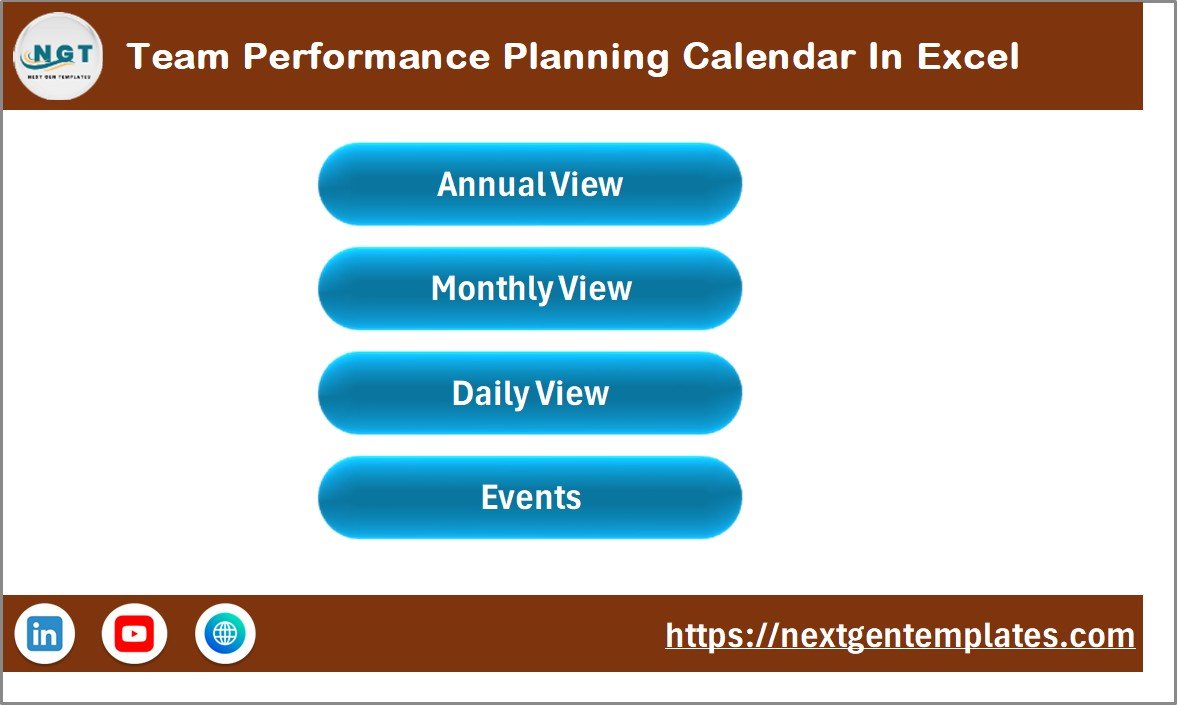
The Home sheet acts as the index page of the calendar template.
This sheet provides four navigation buttons that allow users to jump quickly to different sections of the workbook.
Buttons Available
-
Annual View
-
Monthly View
-
Daily View
-
Events
Because of this structured navigation, users can easily move between different calendar views.
This design improves usability and saves time when accessing different sections of the calendar.
Annual View Sheet – Complete Year Planning
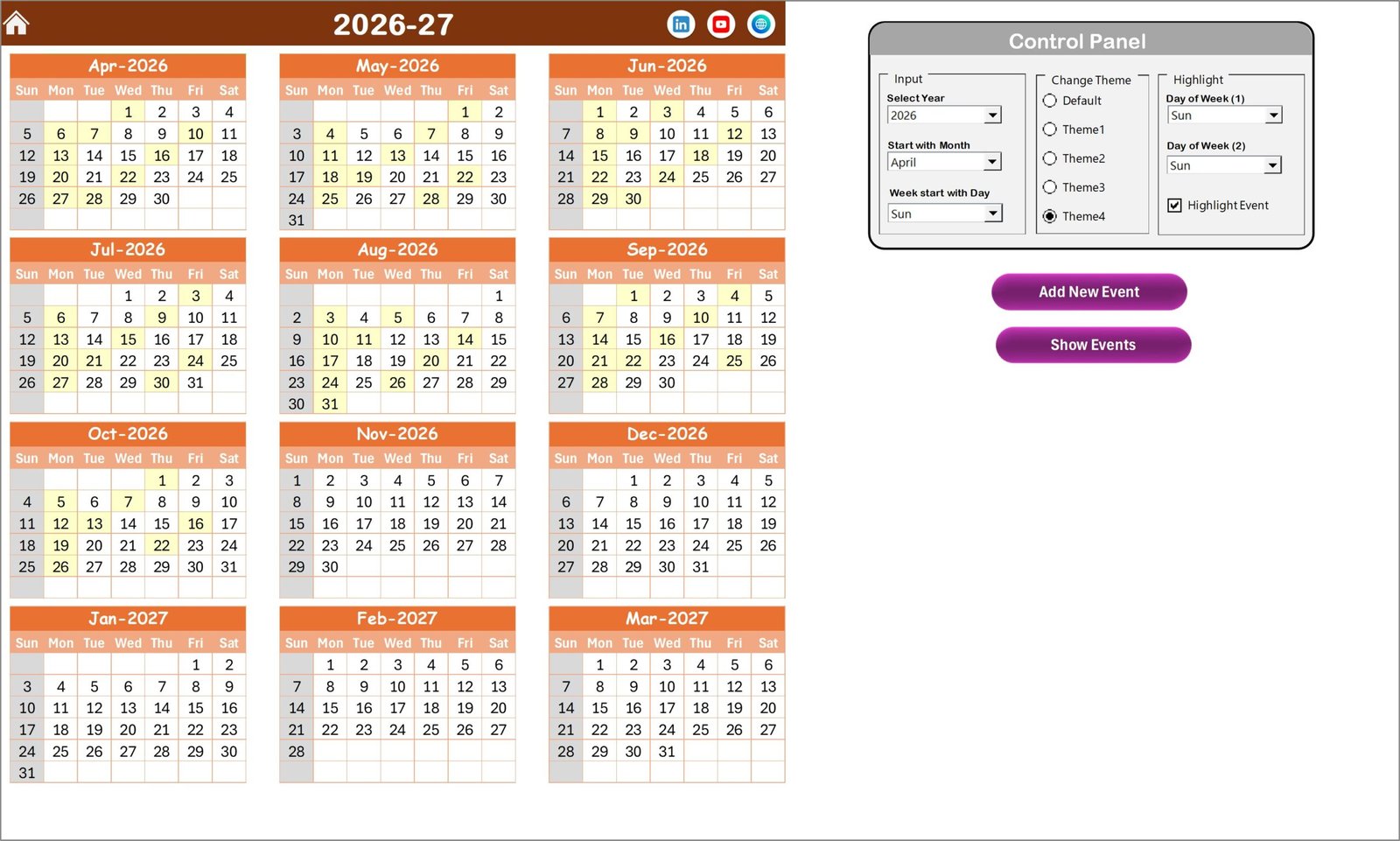
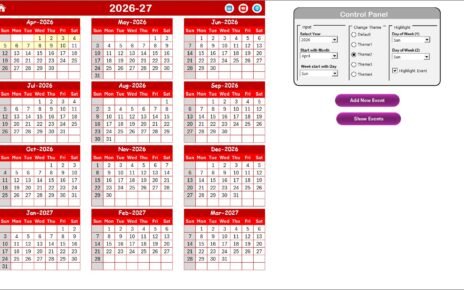
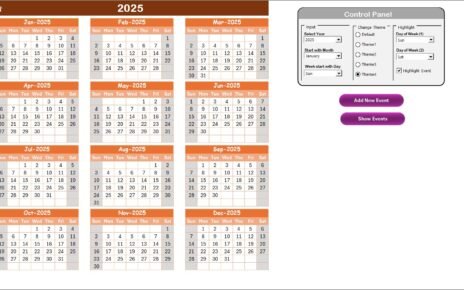
The Annual View Sheet displays the calendar for the entire year.
Users can view all 12 months in a single page.
This layout helps teams plan yearly schedules and monitor important events across months.
Control Panel Features
The Annual View sheet includes a Control Panel that allows users to customize the calendar.
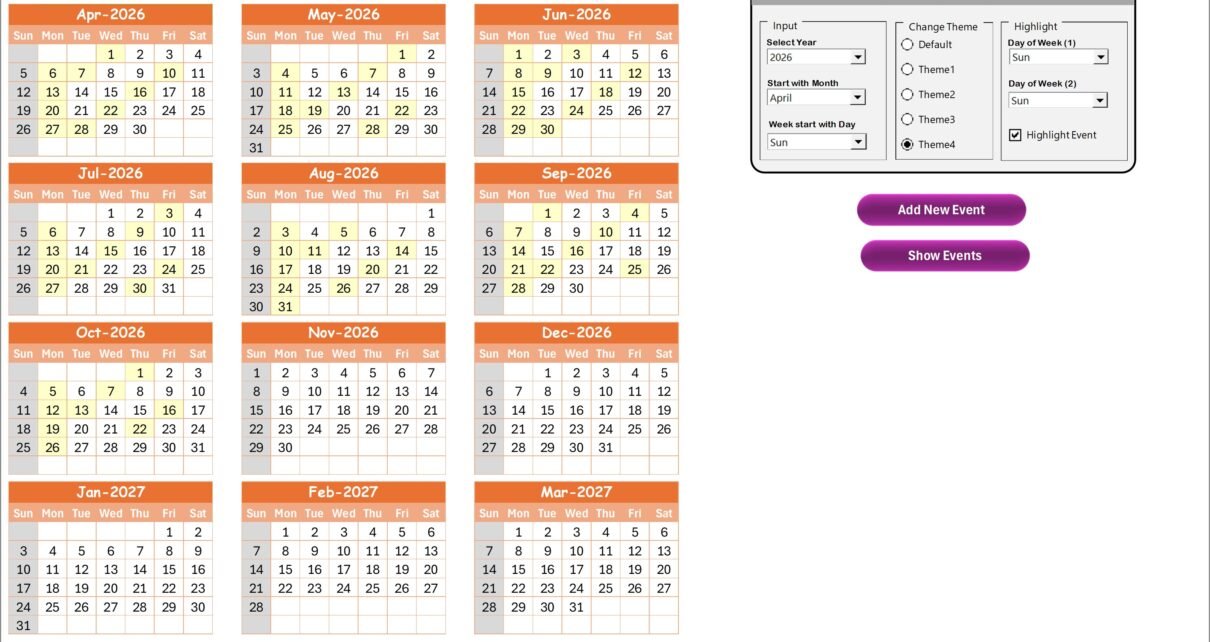
The control panel contains three groups:
Input Group
This section allows users to customize the calendar settings.
Users can:
-
Select the Year
-
Change the starting month
-
Select the starting day of the week
Once these inputs change, the entire calendar automatically updates.
Change Theme Group
The template includes five color themes.
Users can select a preferred theme to apply it across the entire workbook.
This feature allows organizations to customize the calendar design.
Highlight Group
This section allows users to highlight specific days of the week.
For example:
-
Highlight Saturday and Sunday in grey color
-
Highlight any selected weekdays
The template also includes a Highlight Event checkbox.
When enabled, the calendar highlights event dates in yellow color.
This feature helps users quickly identify scheduled events.
Event Management Buttons
The Annual View sheet includes two important buttons.
Add New Event Button
Users can add new events directly from the calendar.
Steps:
-
Select a date on the calendar.
-
Click Add New Event.
-
Fill the event details in the form.
-
Click Submit.
The event automatically appears on the selected date.
Show Event Button
Users can view all events scheduled for a selected date.
Simply select the date and click Show Event.
The system displays the event list.
Click to Purchases Team Performance Planning Calendar in Excel
Monthly View Sheet – Detailed Monthly Planning
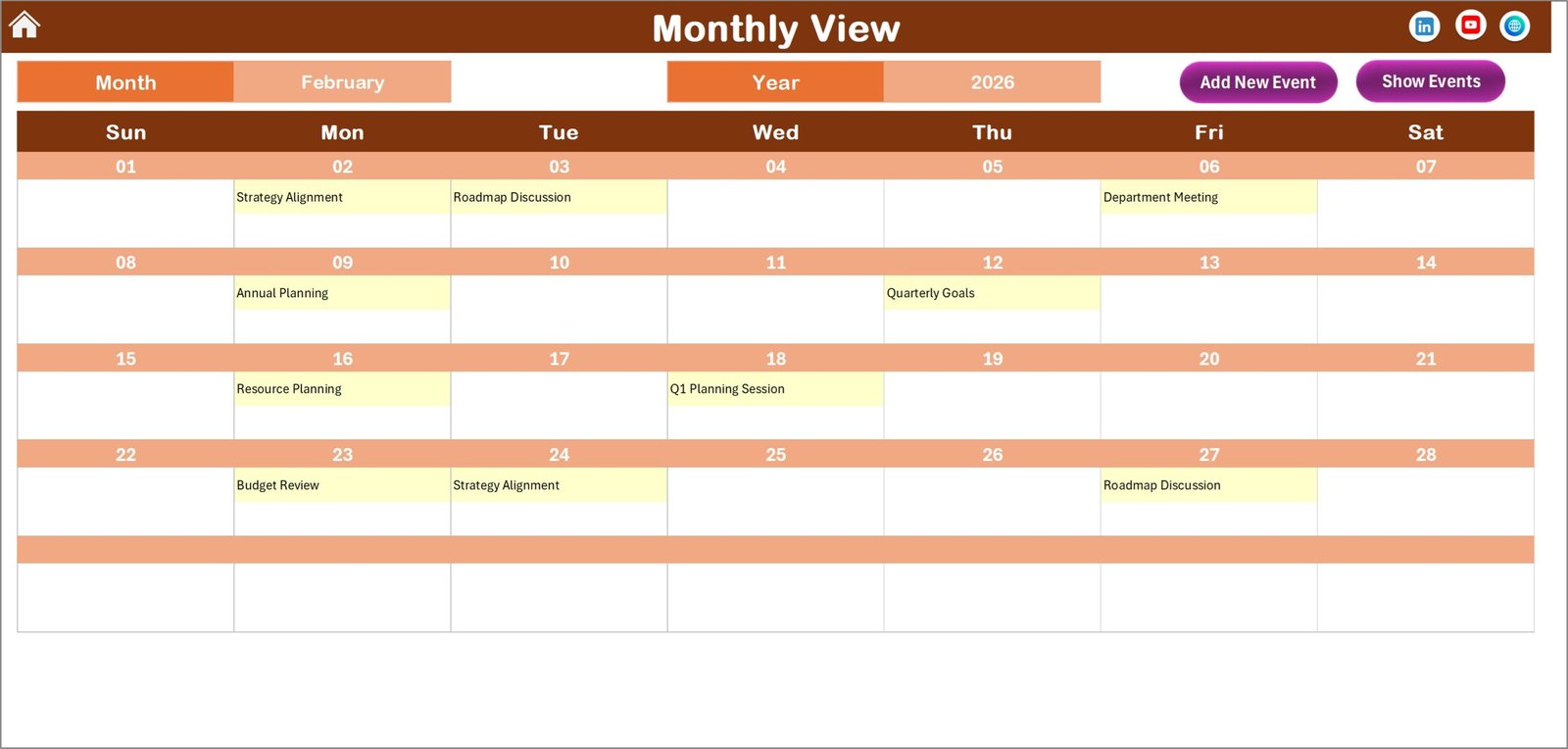
The Monthly View Sheet displays a detailed calendar for a specific month.
Users can select the Month and Year from the top section.
The calendar updates automatically based on the selected period.
This sheet displays one event directly on the calendar.
If multiple events exist on the same date, the calendar displays a message:
“More than 1…”
This feature ensures that the calendar remains clean and easy to read.
Monthly View Event Buttons
Two buttons appear at the top of the Monthly View sheet.
Add New Event
Users can add events directly from the monthly calendar.
Steps:
-
Select a date
-
Click Add New Event
-
Fill the event form
-
Submit the record
Show Event
This button allows users to view all events scheduled on a selected date.
This makes event management easier.
Daily View Sheet – Event List by Date Range
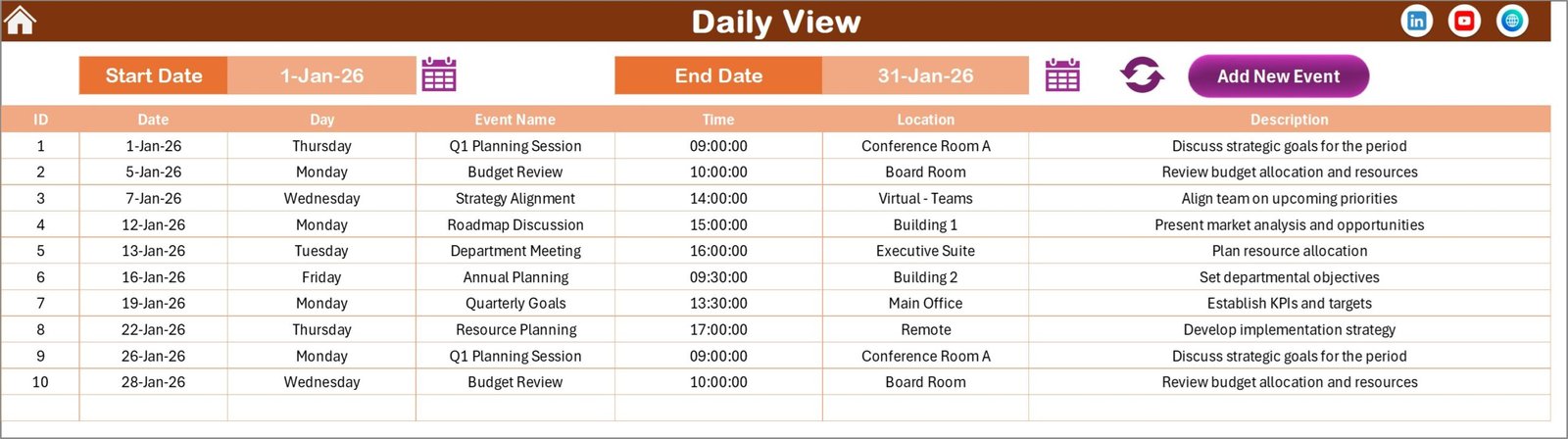
The Daily View Sheet displays events in a structured list format.
This sheet helps users analyze events across a specific date range.
At the top of the sheet, users can select:
-
Start Date
-
End Date
Users can choose dates using the calendar icon.
After selecting the date range, click the Refresh Button.
The dashboard then displays all events within the selected period.
Add New Event Feature
The Daily View sheet also includes an Add New Event Button.
Users can quickly add events using the event entry form.
Once submitted, the event appears in the event database.
Click to Purchases Team Performance Planning Calendar in Excel
Events Sheet – Event Database
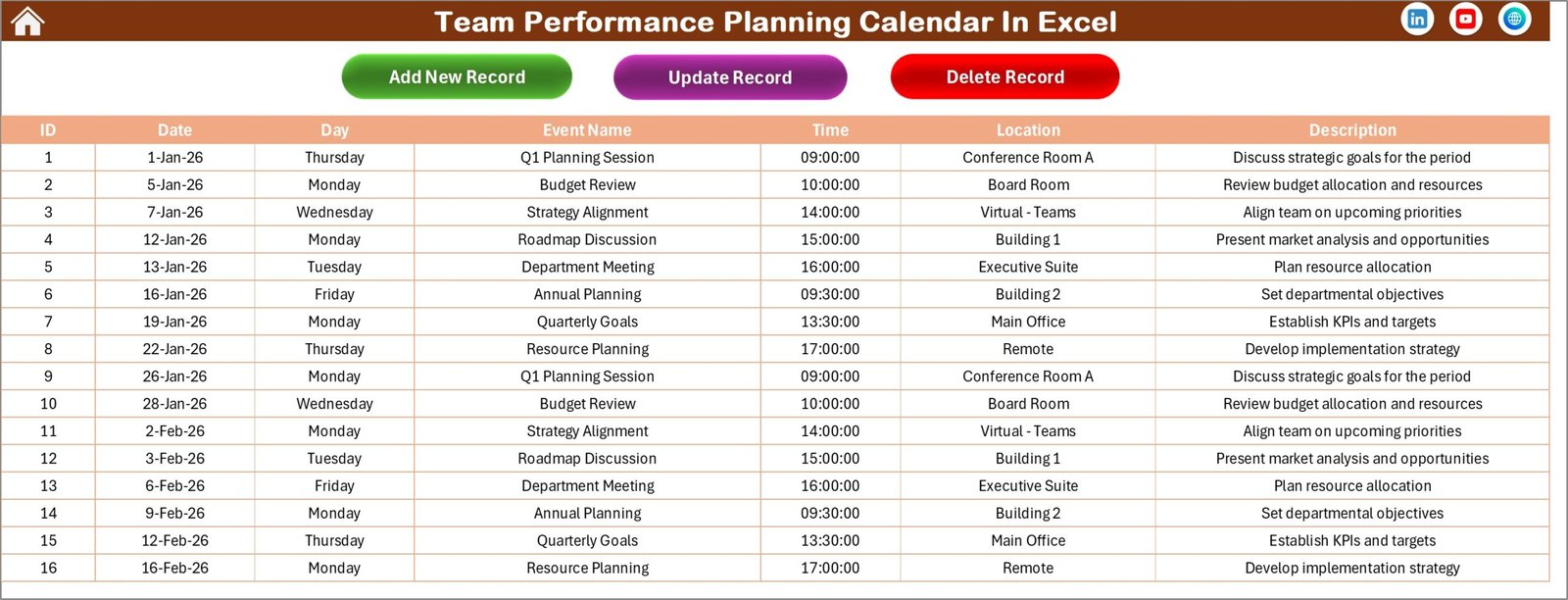
The Events Sheet acts as the central database for all events.
Every event added to the calendar stores here.
The sheet records the following information:
-
ID – Auto-generated number
-
Date – Event date
-
Day – Day of the week
-
Event Name – Name of the event
-
Time – Event time
-
Location – Event location
-
Description – Event details
This structured database ensures that the calendar manages events efficiently.
Event Management Buttons
At the top of the Events sheet, three buttons manage event records.
Add New Record
This button opens the event form.
Users can add a new event and submit it to the database.
Update Existing Record
Users can modify an existing event.
Steps:
-
Select the event ID
-
Click Update Existing Record
-
Edit the information
-
Submit changes
The record updates automatically.
Delete Record
Users can delete unwanted events.
Steps:
-
Select the event ID
-
Click Delete Record
The system removes the event from the database.
Click to Purchases Team Performance Planning Calendar in Excel
Advantages of Team Performance Planning Calendar in Excel
Using this calendar offers several benefits for organizations.
Improved Team Scheduling
Teams can plan meetings, reviews, and training sessions efficiently.
Centralized Event Management
All team activities store in one structured database.
Better Productivity
Structured planning reduces confusion and improves team coordination.
Easy Event Tracking
Users can easily track events through annual, monthly, and daily views.
Customizable Design
The template allows theme changes and calendar customization.
Automated Event Management
Event forms simplify event entry and updates.
Opportunities for Improvement in Team Planning Systems
Although this template provides strong scheduling features, organizations can enhance planning systems further.
Integrate Task Management
Adding task tracking features can improve team productivity.
Include Performance Metrics
Linking calendar events with performance metrics can provide deeper insights.
Add Email Notifications
Automated reminders can help teams stay informed about upcoming events.
Integrate Collaboration Tools
Connecting the calendar with project management tools can improve coordination.
Click to Purchases Team Performance Planning Calendar in Excel
Best Practices for Using a Team Performance Planning Calendar
Organizations should follow these best practices to maximize benefits.
Maintain Accurate Event Data
Always enter accurate event information.
Update the Calendar Regularly
Regular updates ensure the calendar reflects current schedules.
Use Consistent Naming
Standard event names improve organization.
Plan Events in Advance
Planning events early prevents schedule conflicts.
Train Team Members
Provide training so team members use the calendar effectively.
How to Implement a Team Planning Calendar Successfully
Organizations can implement this system through the following steps.
Step 1 – Identify Planning Needs
Determine the types of events and activities that require scheduling.
Step 2 – Customize Calendar Settings
Adjust calendar themes, start day, and highlight options.
Step 3 – Add Initial Events
Populate the calendar with important events.
Step 4 – Train Team Members
Ensure that users understand how to manage events.
Step 5 – Monitor and Update
Regularly update events and schedules.
Conclusion
Effective planning plays a critical role in team performance and organizational productivity. Without structured scheduling tools, teams often struggle to manage meetings, events, and project activities.
The Team Performance Planning Calendar in Excel provides a powerful solution for organizing team schedules and managing important events.
Because the template includes annual, monthly, and daily views along with automated event management features, teams can plan activities efficiently and maintain better coordination.
By implementing this calendar system, organizations can improve scheduling efficiency, reduce missed deadlines, and enhance overall team productivity.
Click to Purchases Team Performance Planning Calendar in Excel
Frequently Asked Questions (FAQs)
What is a Team Performance Planning Calendar?
A Team Performance Planning Calendar is a scheduling tool that helps organizations plan meetings, training sessions, and team events.
Why should teams use an Excel planning calendar?
Excel calendars provide structured planning, automated event management, and customizable views.
Can multiple events be scheduled on the same date?
Yes. The calendar supports multiple events on the same date.
Can events be edited or deleted?
Yes. Users can update or delete event records using the Events sheet.
Is this calendar suitable for project planning?
Yes. Teams can use this calendar to track project milestones and important deadlines.’
Click to Purchases Team Performance Planning Calendar in Excel
Visit our YouTube channel to learn step-by-step video tutorials