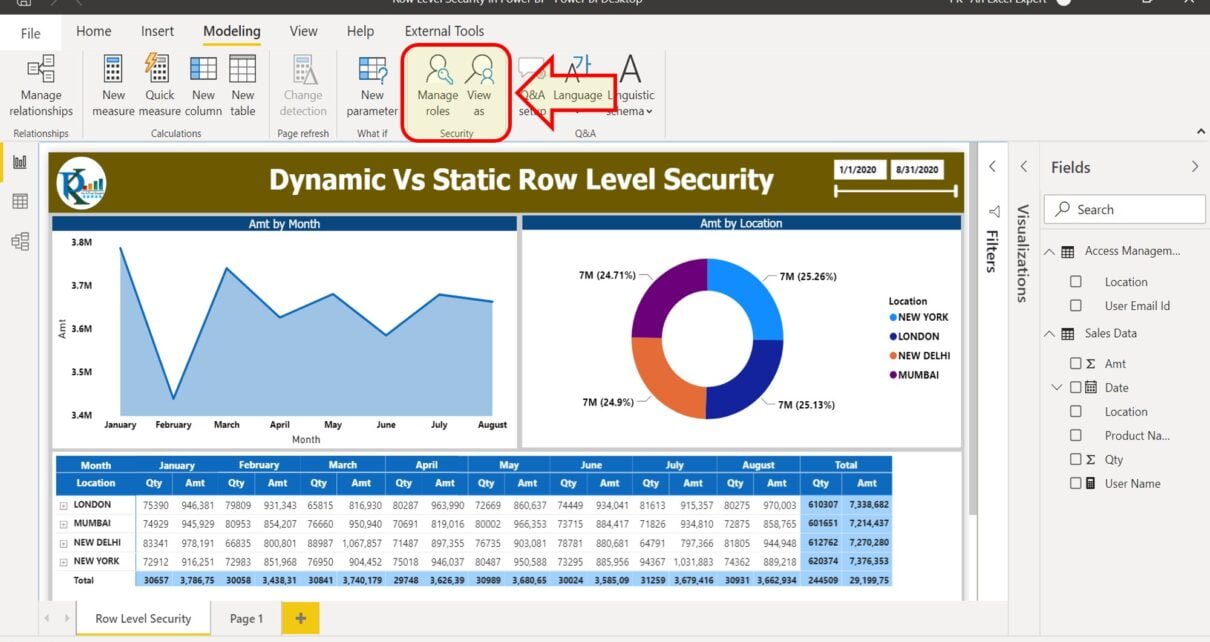
Row-level security in Power BI uses role filters to restrict which data rows users can access. This tutorial introduces static and dynamic approaches, including the USERPRINCIPALNAME DAX function for the dynamic example. The original video and practice file accompany the walkthrough.
Static and dynamic security: what changes?
A static rule filters rows to a fixed value. A dynamic rule can use the signed-in user’s identity and a correctly related user-mapping table. USERPRINCIPALNAME alone does not configure the required model relationships or role membership.
Validate roles before sharing
Define the rules, publish the model, assign role members in the service and test the resulting access. RLS restricts workspace Viewers; it does not restrict Admin, Member or Contributor roles. Confirm that each intended viewer sees only the permitted rows. Follow Microsoft’s row-level security and testing guidance for current steps and limitations.
Row level security with Power BI is used to restrict data access for particular users. Filters restrict data access at the row level, which are defined within roles in Power BI Desktop.
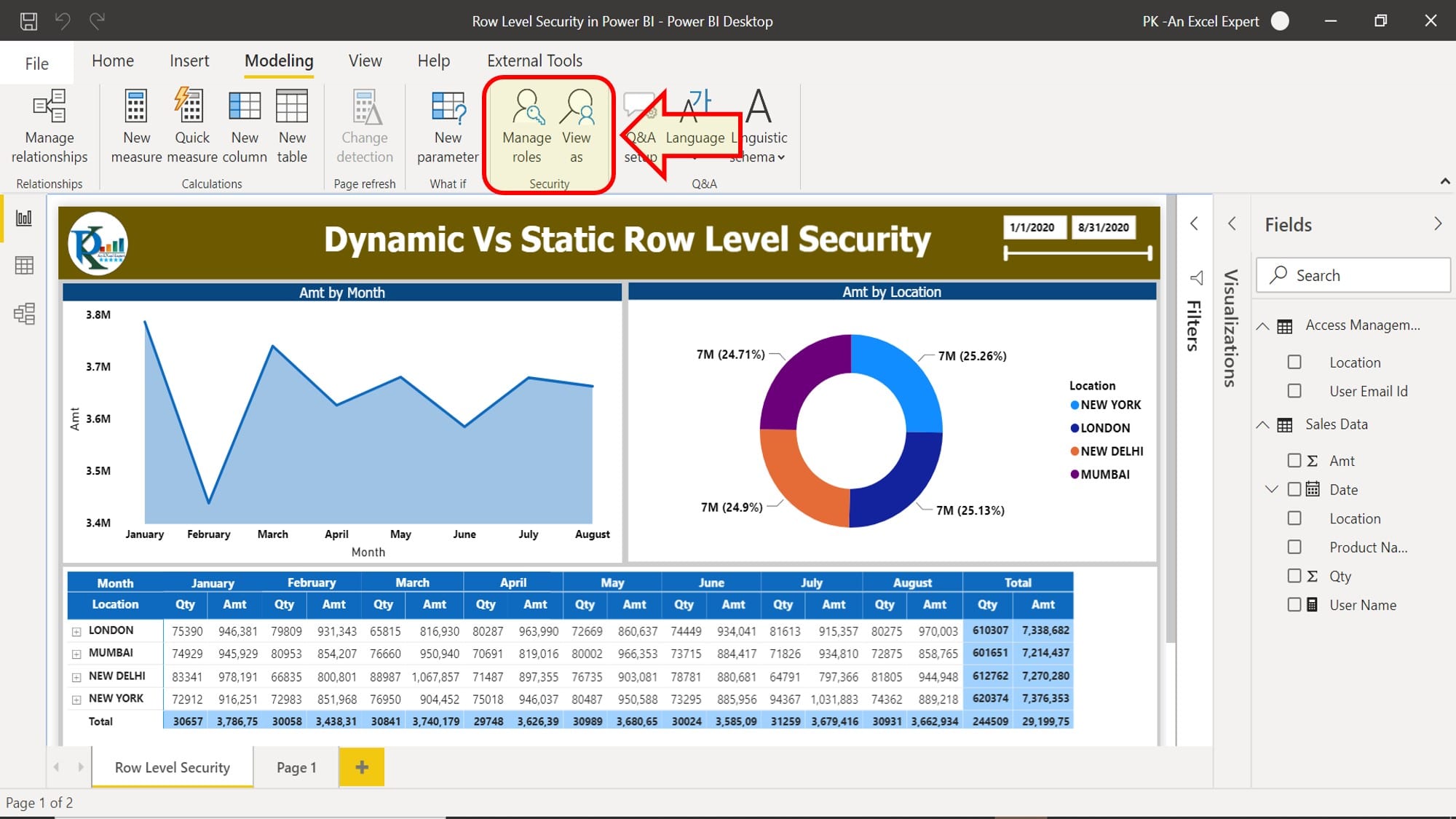
We can use static and dynamic (using USERPRINCIPALNAME DAX function) Row Level Security in Power BI.
Learn how to create Quality Analysis Dashboard in Power BI
Watch the step by step video tutorial:
Click here to download the practice file.
Visit our YouTube channel to learn step-by-step video tutorials